

Early November is when we often see the year’s first flurries. Nothing that sticks, just a brisk reminder to tuck the last things into the larder. It’s the season of squirrel energy, sometimes more literally than others.
This year is a mast year for our oaks, the first in quite a while. The trees seem to conspire, producing far more than the squirrels can possibly cache, ensuring that some forgotten acorns will wake in spring and take their chances.
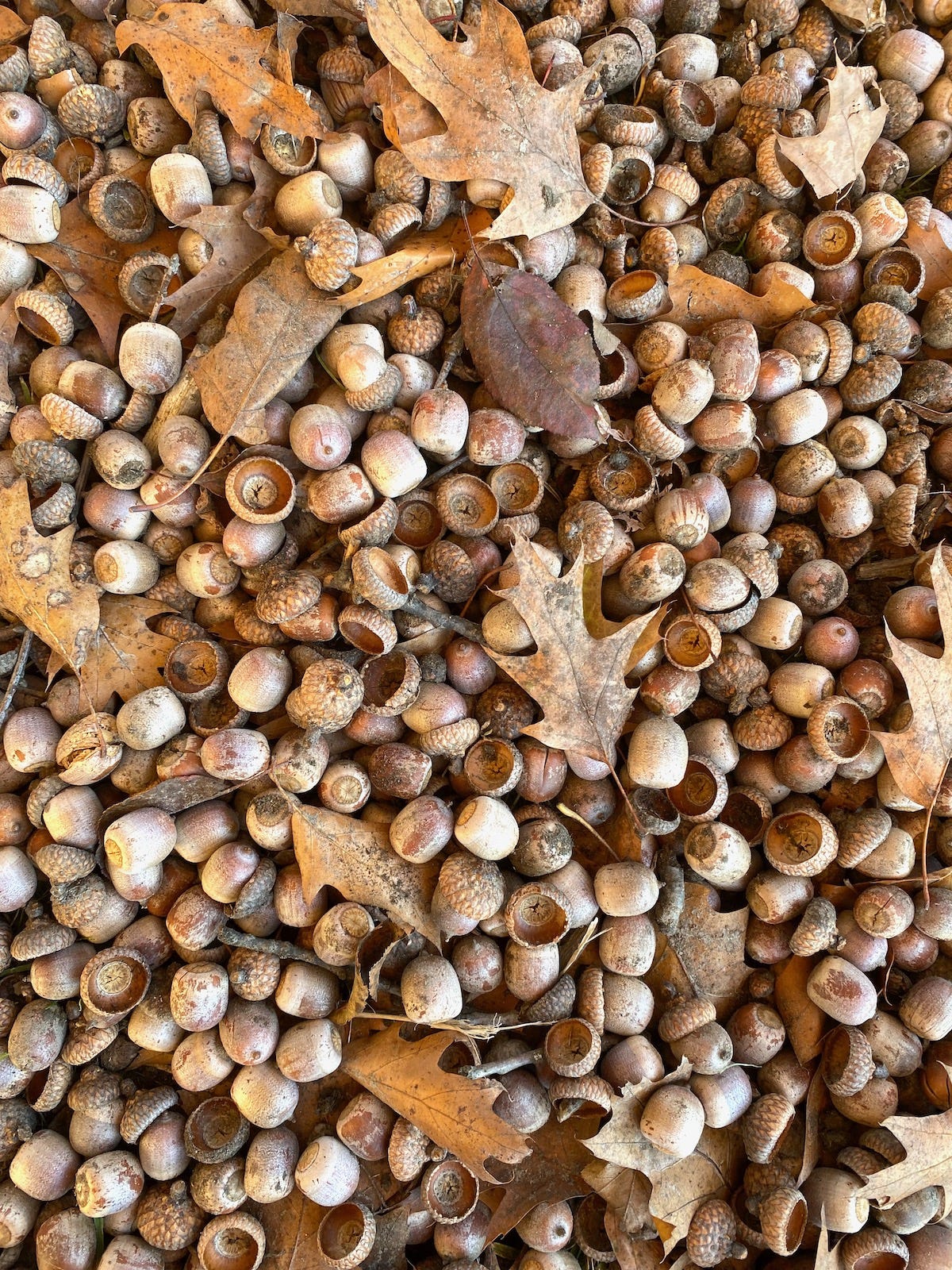
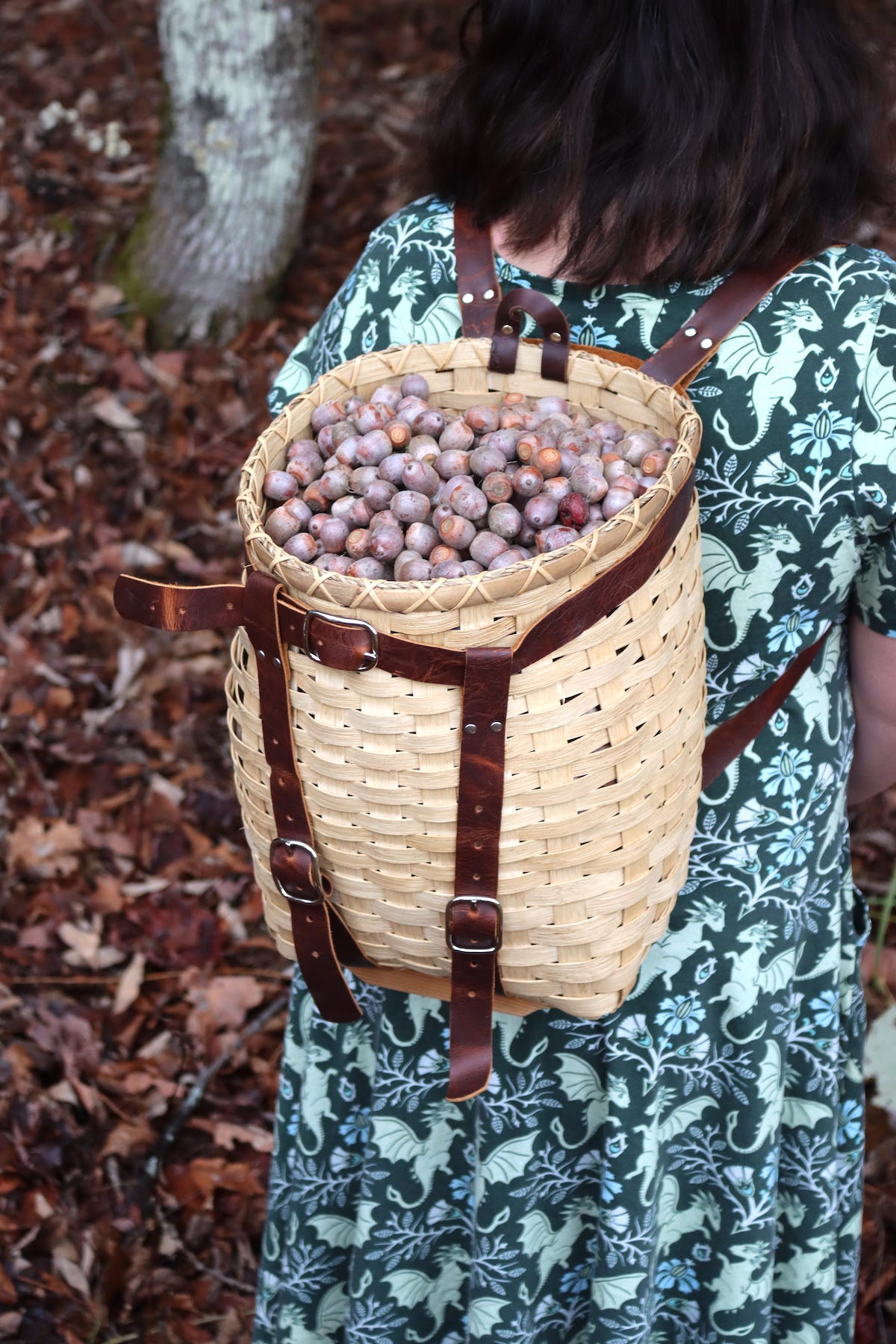
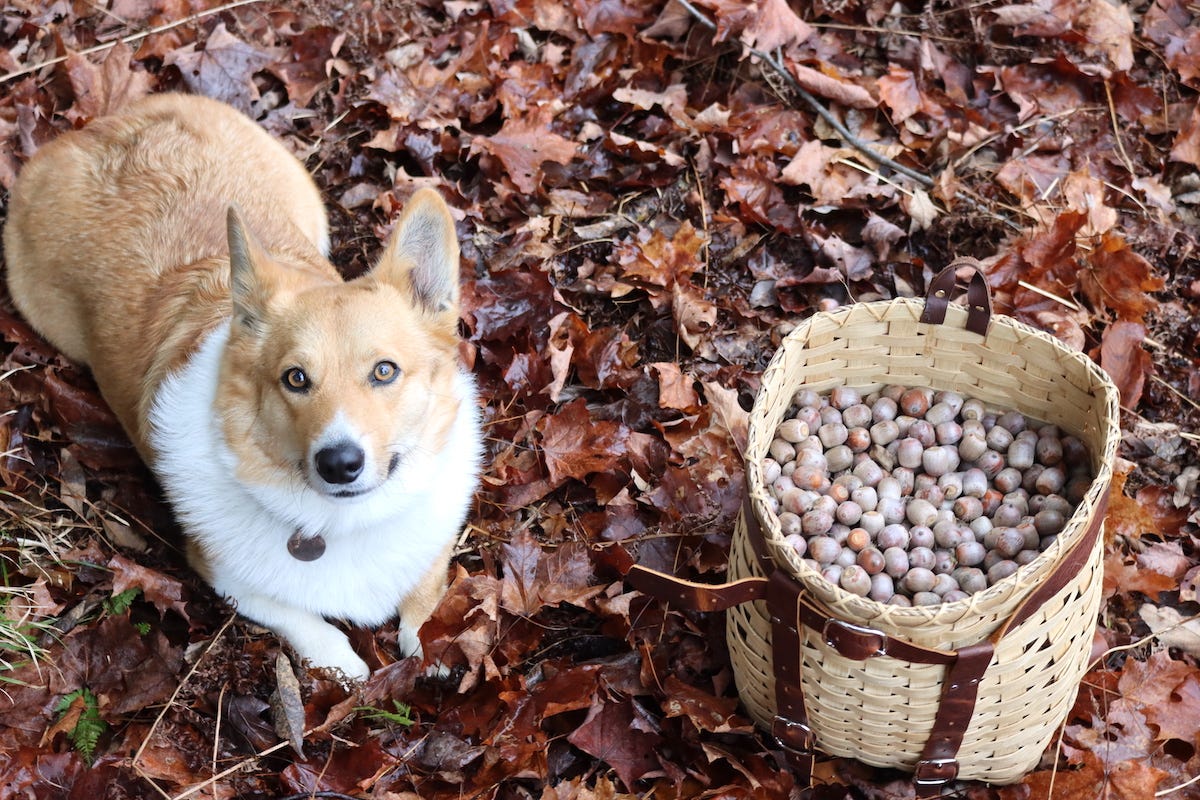
The last time this happened we gathered acorns by the bucket, partly for acorn recipes, my daughter still talks about the acorn ice cream from that year, but mostly for planting.
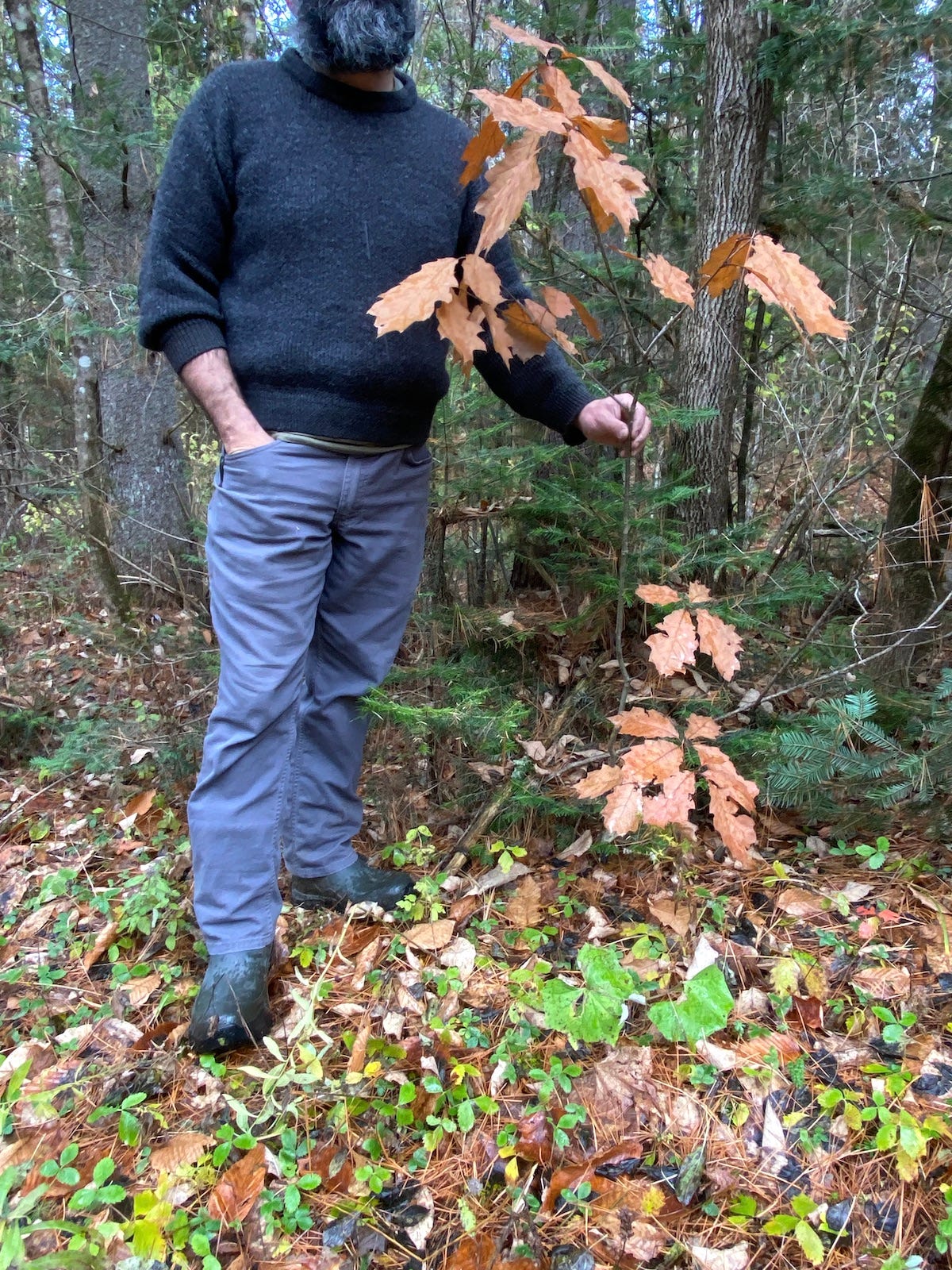
Our land didn’t have oaks then. Now their saplings dot the woods, adding diversity as the ash trees that once dominated our land now slip toward a quiet extinction.
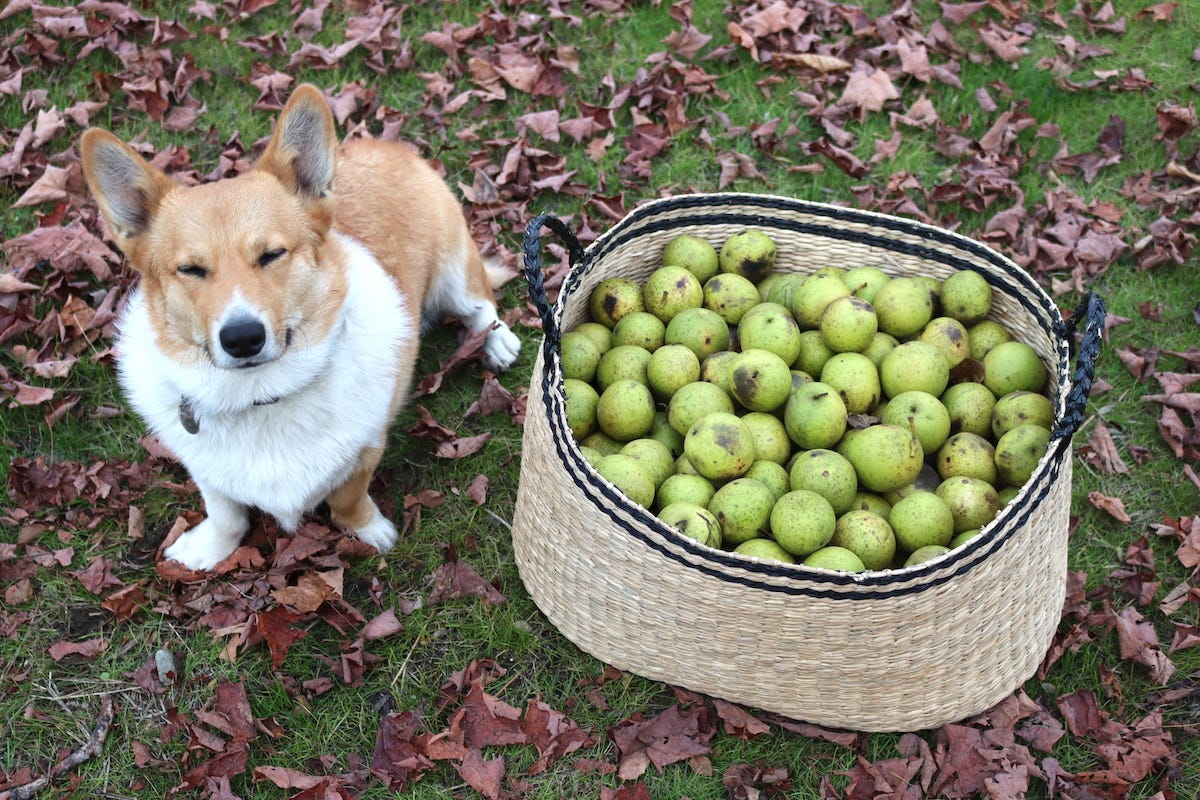
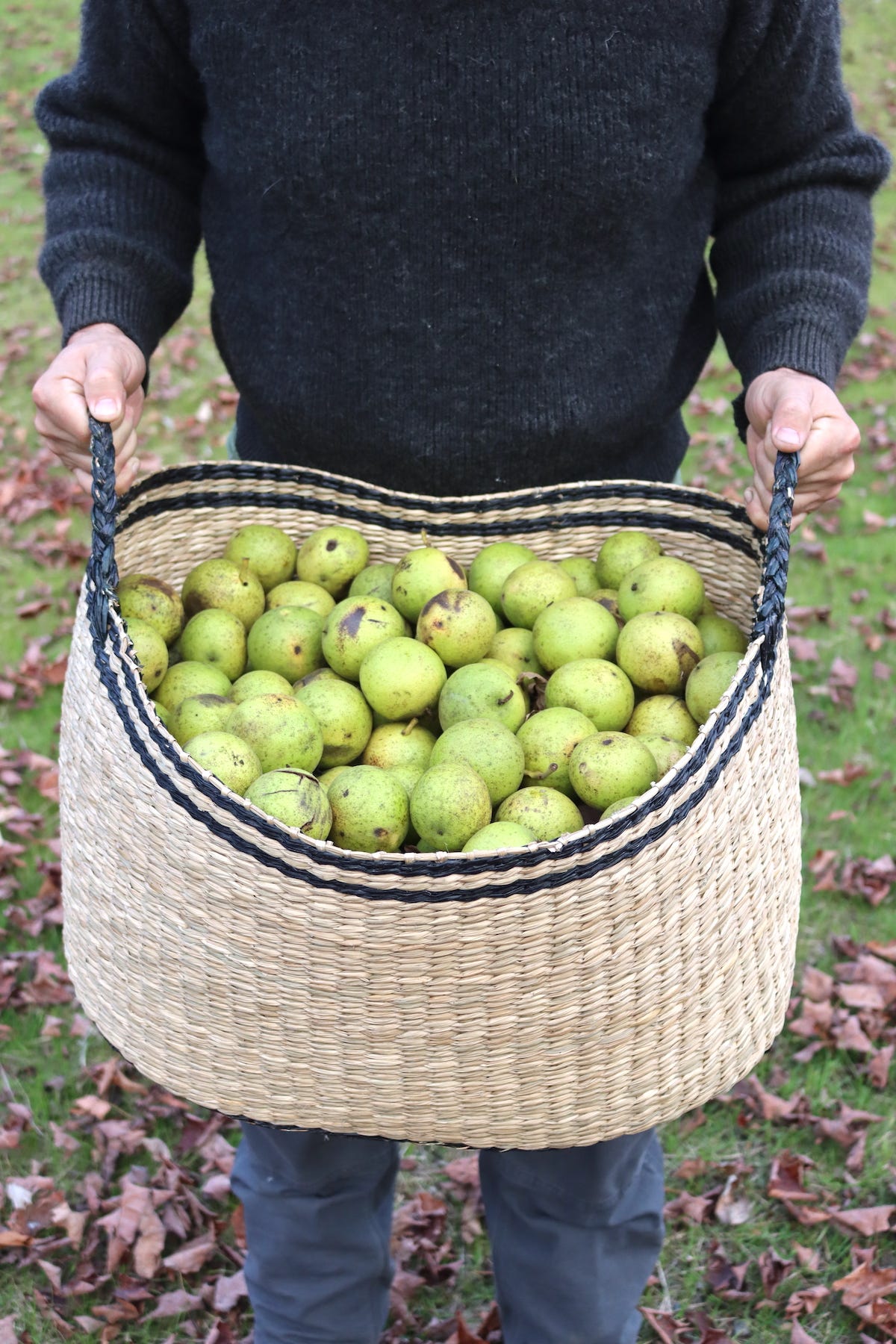
We’re gathering black walnuts, butternuts, beechnuts, hazelnuts, chestnuts, hickory, ginkgo, wild plums, and witch-hazel seeds as we make our rounds.
Food for the forest and everyone who lives in it, us included.
Outside of oaks, finding seed sources isn’t easy. Most of these are what city ordinances call “messy trees,” treated as a nuisance instead of a resource.
It wasn’t always that way.
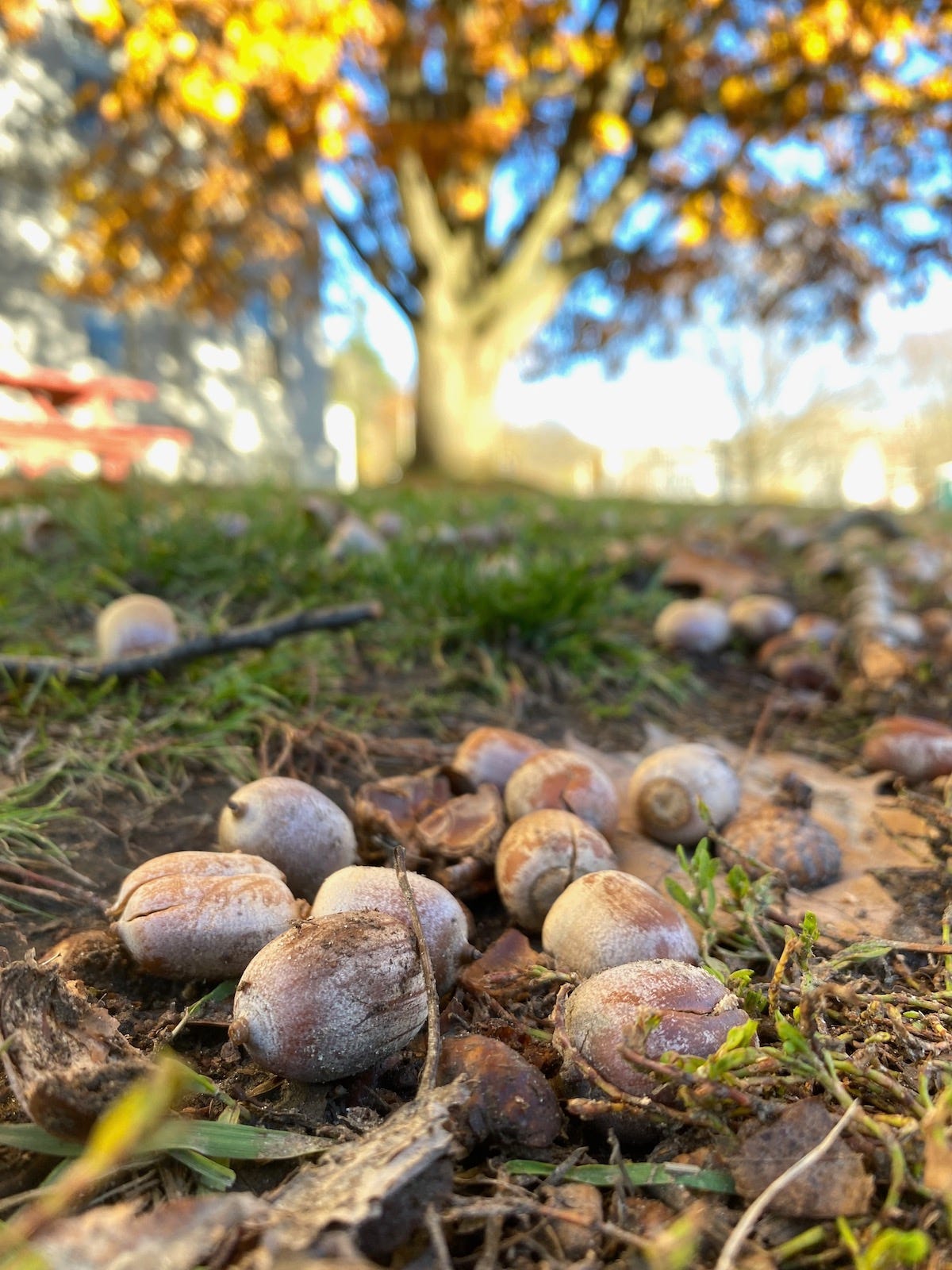
These trees were once a treasure handed from one generation to the next. Some don’t bear until they’re 80 or 100 years old; they’re almost always planted by people who will never taste a single nut.
You can still find an ancient, craggy specimen in a farmhouse dooryard, though each year a few more are cut for tidiness. Shocking, really, given the price of food. But there is one place they’re almost never felled for appearance, lumber, or fuel, and haven’t been for generations.
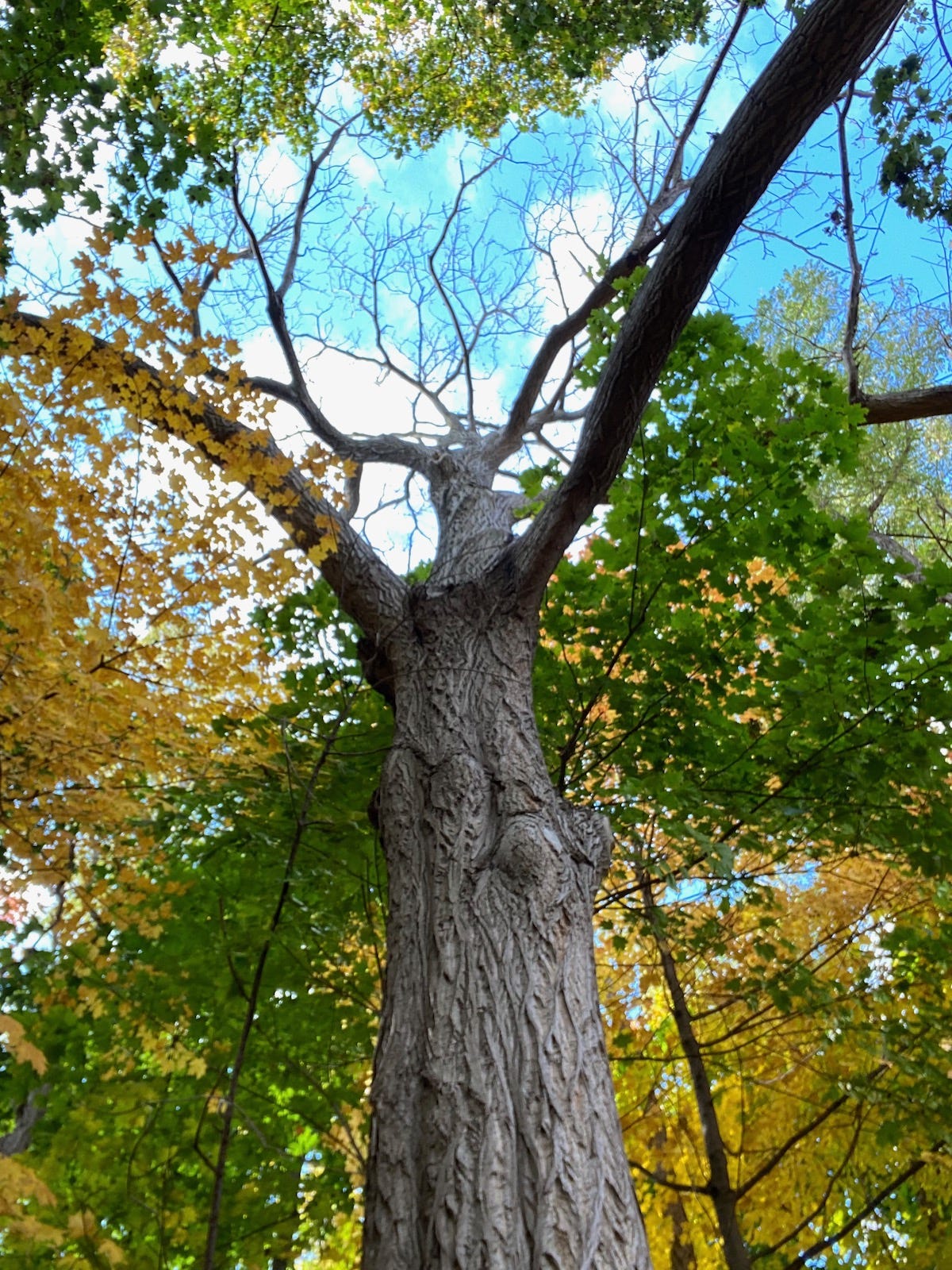
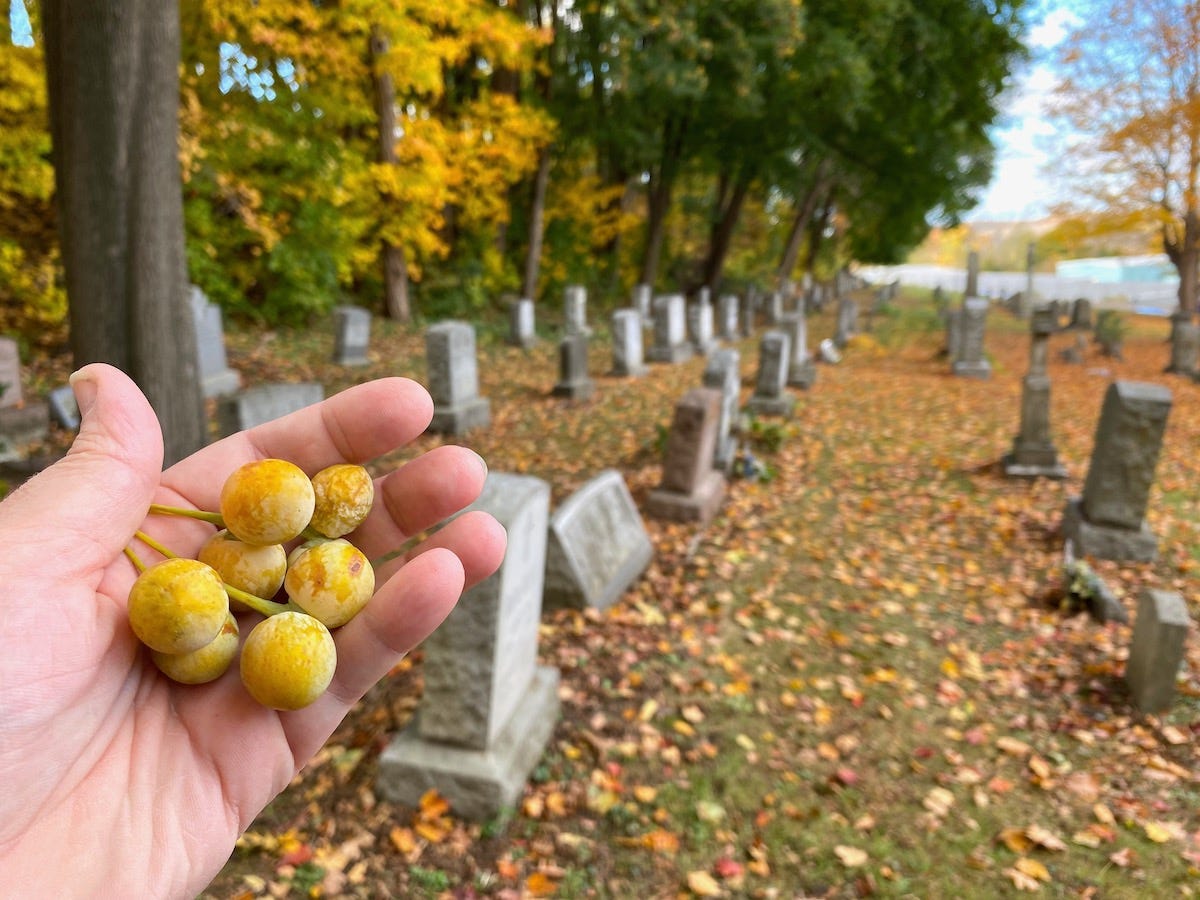
Old cemeteries.
I mean the truly old ones, from settlement days, when hunger meant an empty plate, not a cheaper store-brand substitution at the supermarket. People understood these grounds would endure, whether remembered or forgotten; the trees would abide either way.
But when they were planted, they were meant to be remembered. They were meant to call people back each autumn.
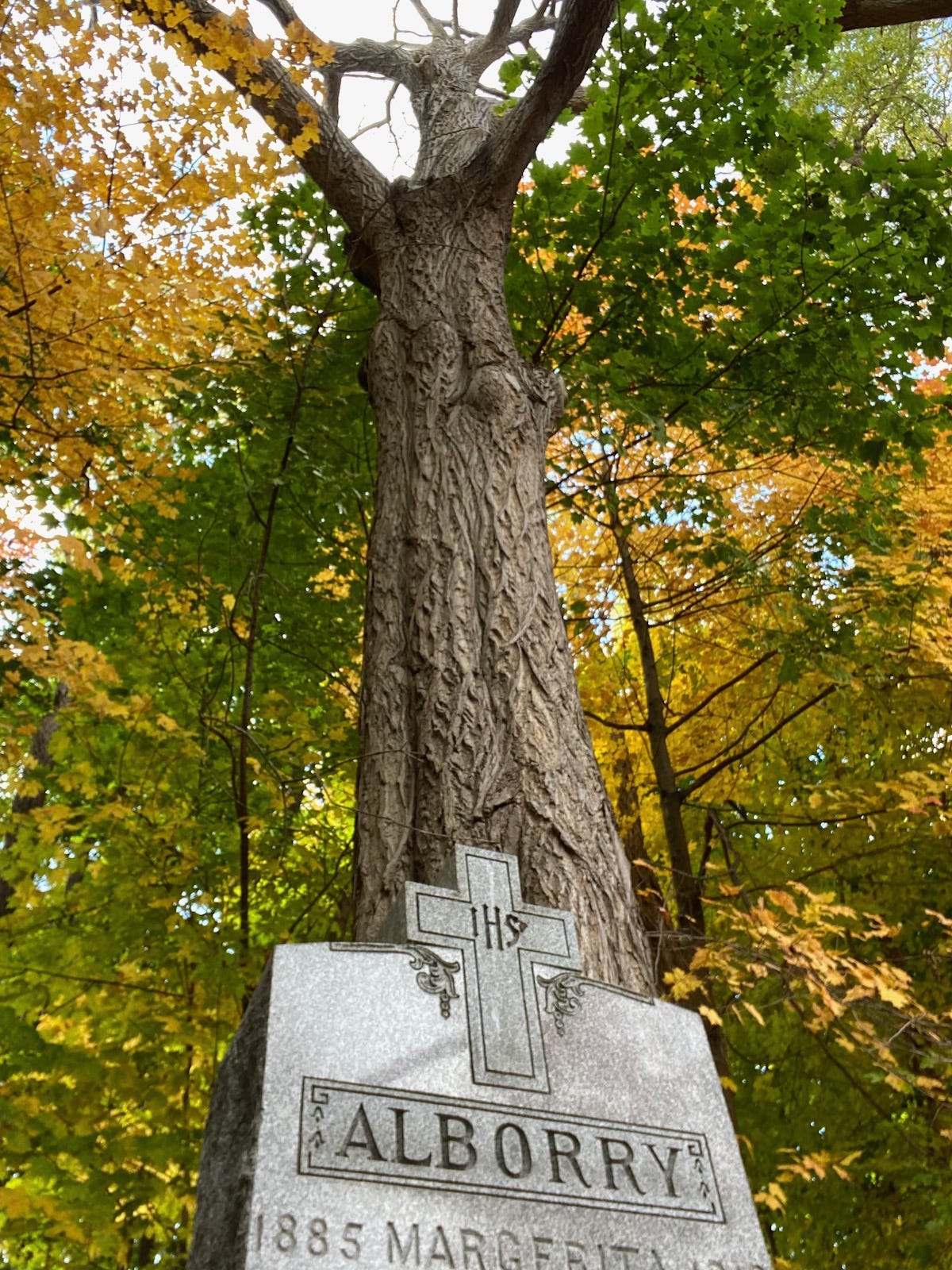
In the late 1700s and throughout the 1800s, a cemetery visit wasn’t the hushed ritual it is today. Whole families came with a picnic blanket and spent the day among the stones. Children laughed and ran; neighbors traded news with kin above and below ground.
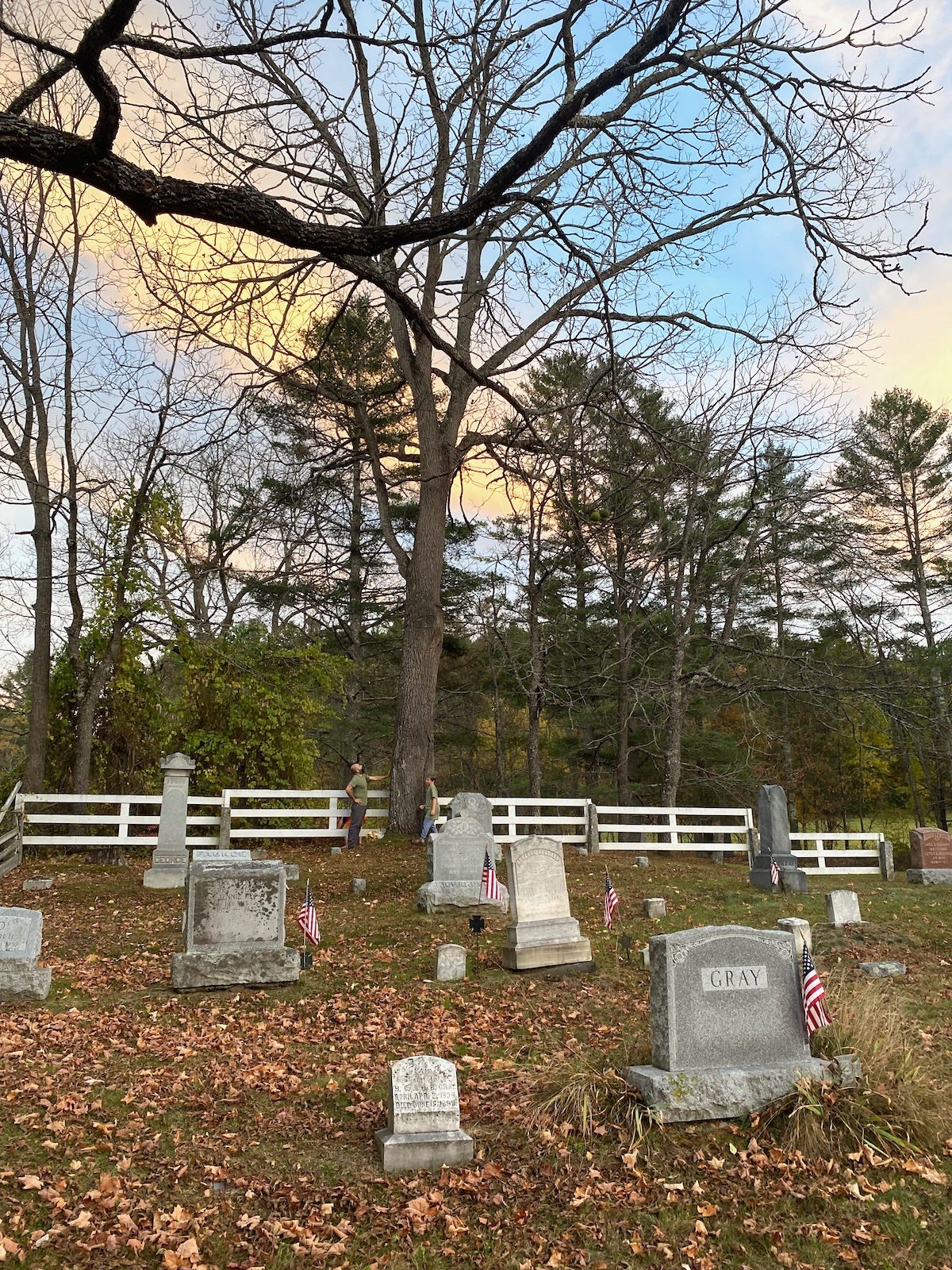
Nut trees that span generations were planted there for a reason, by people who knew hunger well enough to plan beyond it, and who trusted that future strangers would be kin where it mattered.
Each fall the village gathered the nuts, sharing food, stories, and laughter. They nourished spirits and laid in calories for winter at the same time.
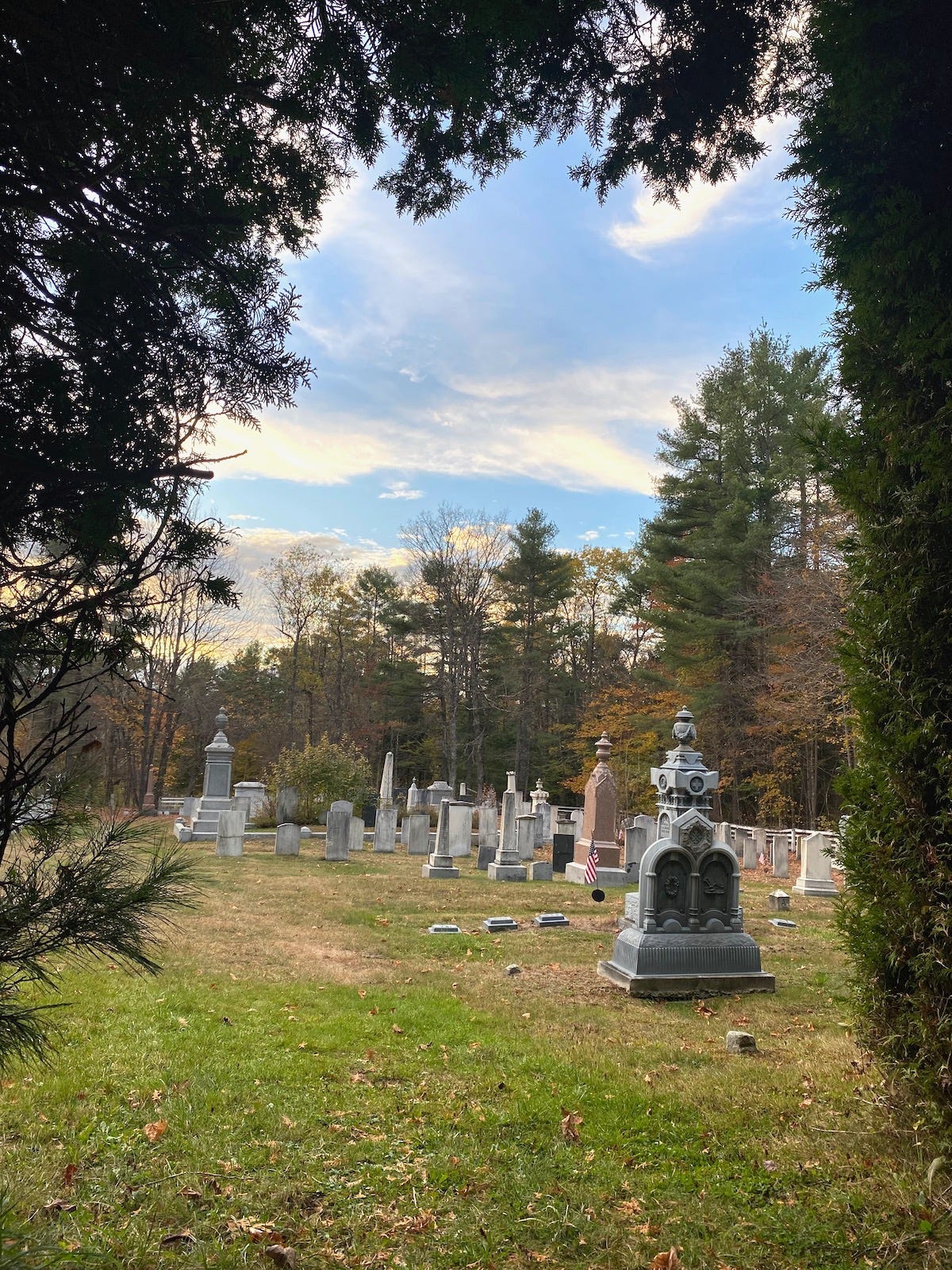
Vermont is full of such places, old graveyards scattered across the hills. Many haven’t seen a burial in generations and are visited only when the town crew mows a few times each summer.
But for me and mine, the trees call us back.
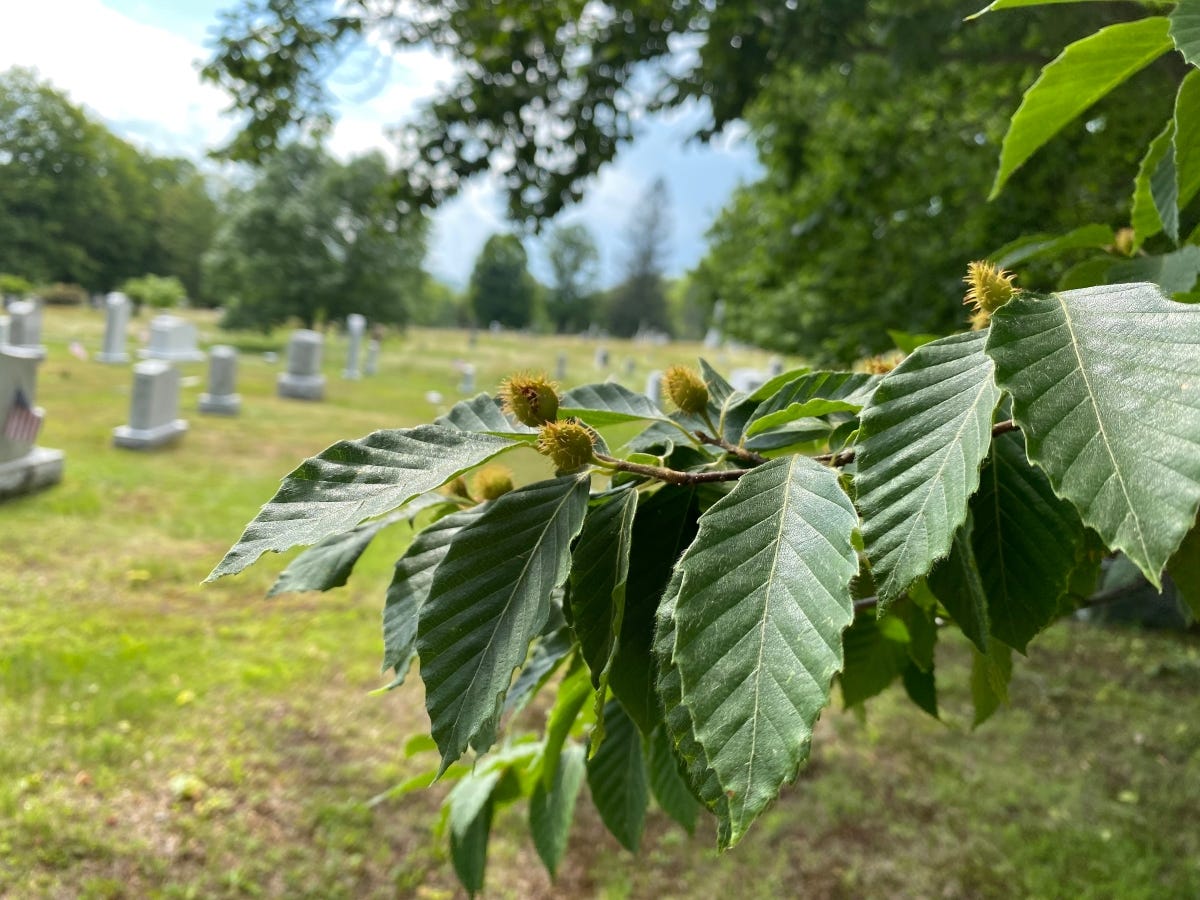
My children play and laugh as children did a century ago, threading carefully between stones. I can’t help but think it puts a smile on the faces of those who rest here, one way or another.
Have you ever met someone truly old, tempered by both hardship and happiness, who doesn’t soften at a child’s smile? You don’t last that long by hating life.
I like to believe the ones beneath these boughs feel that same softening when laughter moves the leaves, when small hands sort nuts, and small eyes turn to the sky above watching the harvest rain down.
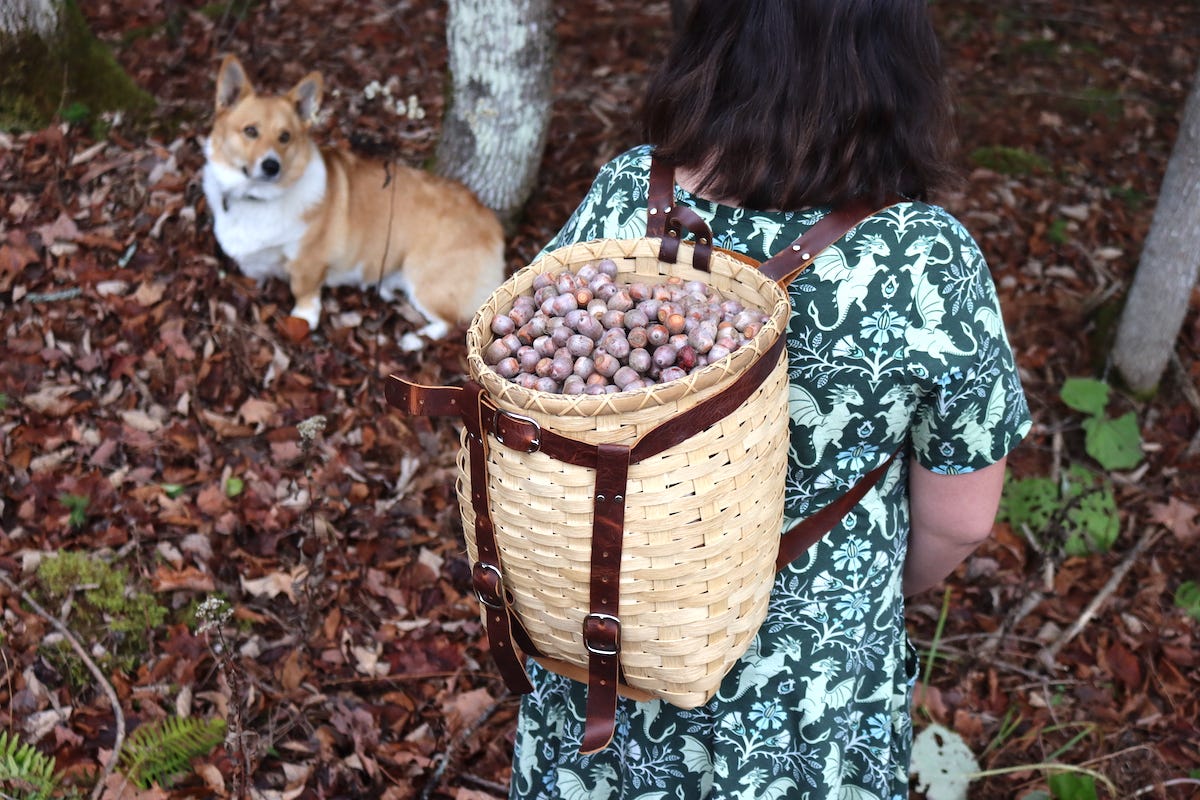
We bring baskets to gather their gifts, not for our pantry so much as for the woods.
Aside from a small scoop of acorns destined for ice cream for the littles, every nut will be tucked under soil and given a chance at spring.
This mast year alone: 56 gallons of acorns, 32 gallons of black walnuts, 3 gallons of butternuts, 2 gallons of wild plums, a gallon of chestnuts, and a quart each of hazelnuts, ginkgo, and witch-hazel.
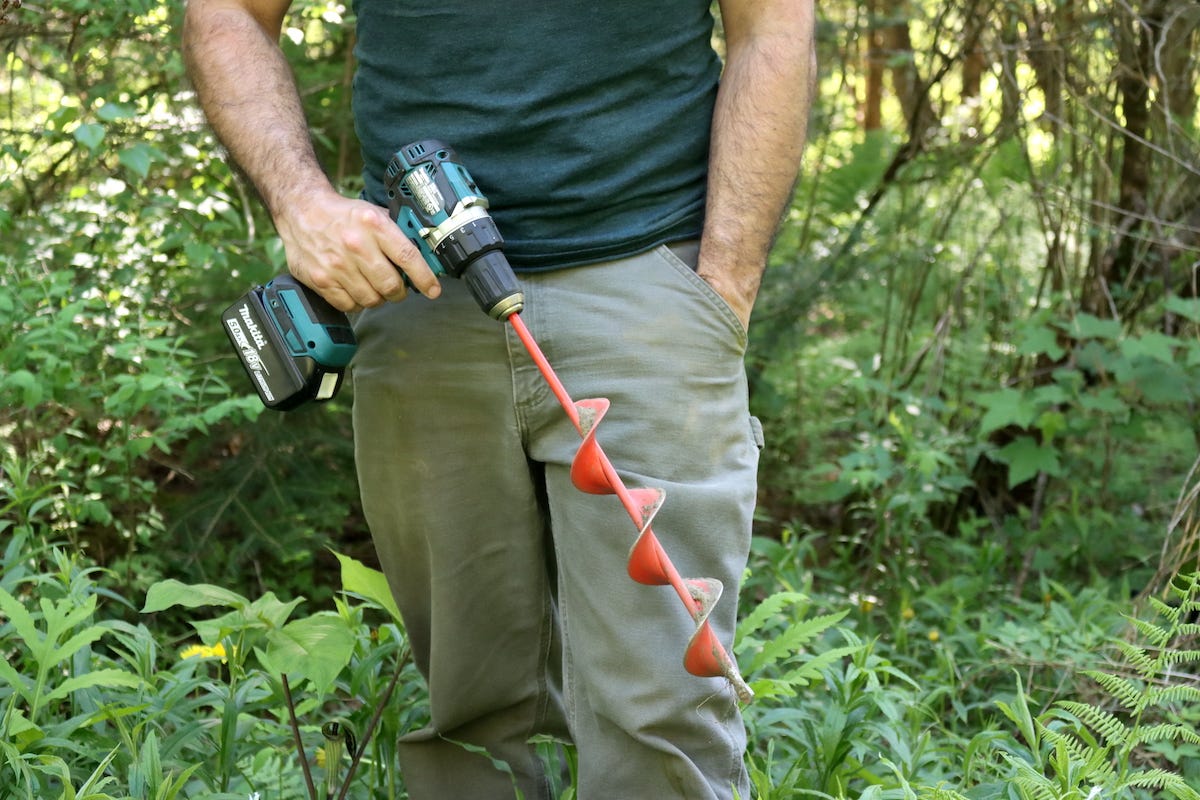
Bucket after bucket carried into the forest, drilled into the earth, and left to wait.
It feels like time travel.
A seed planted ten generations ago in the corner of a forgotten cemetery spreads outward to fill acres centuries later. All it needed was a bucket, a hand drill, and someone that remembers: nourishment, for body and soul, does, in fact, grow on trees.
Until next time,
Ashley at Practical Self Reliance
PS. Many of my readers have asked where they can get seeds for these trees, and I finally now have a source! Sheffield’s Seed sells canker resistant butternut seed, along with hundreds of other varieties. Every nut you can imagine, plus off the wall permaculture foods like hackberries and lotus, and just about every fruit I talk about in my foraging guides, plus hundreds of types of medicinal herbs. Really everything you could possibly grow except the standard garden fare like tomatoes. (No, this is not sponsored at all, I don’t get anything if you choose to order seed from them. I was just so happy to find them!)
If you’re looking for young trees, a friend of mine started a nursery selling bareroot nut tree seedlings called Yellowbud Farm. He sells them by the 10 pack or 100 pack, for low prices to encourage mass re-forestation. Again, not sponsored, just so happy he’s out there doing it. And they ship!
Right now, when they’re dormant, is the only time you can viably transplant these tap rooted nut trees, and it’s the best time for setting out seed too.
What a lovely walk through history. You always have a way of describing the life and land around you. I loved it when you mentioned the fun the children had. "My children play and laugh as children did a century ago, threading carefully between stones. I can’t help but think it puts a smile on the faces of those who rest here, one way or another." Thank you.
Food for the soul..your post made my heart sing.. thank you so much